
Showing posts with label expertise. Show all posts
Showing posts with label expertise. Show all posts
Tuesday, August 13, 2013
Teaching Assignment at MISI MBA Program
I have been fortunate to have been invited to teach the accounting module for a very special group. The Malaysian Institute for Supply Chain Innovation (MISI) is a Malaysian chapter of Massachusett Institute of Technology (MIT) research and innovation chapter. The campus is located in Bukit Jelutong, Shah Alam.  The MBA curriculum basically follow MIT's program at the Sloan School of Management in the United States. The students are mainly international students who came from within the region. Very smart students indeed and it was such a pleasure to be there with them in class. To qualify for the MBA program, prospective students must obtain a minimum score of 640 GMAT score. For my class today, most of them have obtained 700 GMAT score. Students are very enthusiastic, asking lots of questions along the way. Next week, the students will be presenting a company of their choice and to discuss accounting-related issues. I am really looking forward to that session...


Tuesday, November 22, 2011
Investigative Techniques & Moot Court
One of the courses offered for the Master in Forensic Accounting and Financial Criminology program is Investigative Techniques. The course covers different techniques used by financial fraud investigators or forensic accountants. Basically students would select actual cases involving CBT, corruption, money politics, money laundering, tax evasion, terrorism financing, illegal deposit taking etc and "re-constitute" an investigation framework. The focus is to identify specific legal violation, evidence gathering, data collection, data analysis and report writing. The students would then present their cases in a moot court setting where judges, witnesses and lawyers may be present. Today, in an effort to further improve the content of the curriculum, we invited Tuan Awang from the AG Chambers to provide practical requirements so that students understand basic protocols of court proceedings.
Monday, October 31, 2011
Benford's Law
BENFORD'S LAW is a statistical-based analytical application that can be used to detect irregularities. It provides a data analysis method that can help alert forensic accountants to possible errors, potential fraud, manipulative biases, costly processing inefficiencies or other irregularities. Putting it to work, here are some possible practical applications for Benford's law and digital analysis:
(i) Accounts payable data.
(ii) Estimations in the general ledger.
(iii) The relative size of inventory unit prices among locations.
(iv) Duplicate payments.
(v) Computer system conversion (old to new system; accounts receivable files).
(vi) Processing inefficiencies due to high quantity/low value transactions.
(vii) New combinations of selling prices.
(viii)Customer refunds
(i) Accounts payable data.
(ii) Estimations in the general ledger.
(iii) The relative size of inventory unit prices among locations.
(iv) Duplicate payments.
(v) Computer system conversion (old to new system; accounts receivable files).
(vi) Processing inefficiencies due to high quantity/low value transactions.
(vii) New combinations of selling prices.
(viii)Customer refunds
Saturday, October 15, 2011
Applied Research Presentations
For the September Semester 2011, twelve students registered for the Applied Research Course.  The applied research projects mainly focus on financial criminology cases. With specific research issue or research problem at hand, our post graduate students conduct the applied research projects and find solutions to the problems. Some of cases explored this semester include topics such as "governance of money changers in mitigating money laundering and terrorism financing", "effectiveness of the whistle-blowing programs of a PLC", "Cost Effectiveness of AML/CFT Program in Financial Institutions",
  "Risk Management Analysis of AML/CFT Programs", "Evaluation of the Internal Audit Function in Preventing ML/TF" and "Fraud Risk Indicators for Tax Exasion". Throughout the semester, students present their progress during four scheduled meetings with me, who act as the supervisor for the projects. Today, the students presented their research instruments and they are preparing themselves for their field work and data collection. I foresee some very interesting findings from the research projects this semester....
 The applied research projects mainly focus on financial criminology cases. With specific research issue or research problem at hand, our post graduate students conduct the applied research projects and find solutions to the problems. Some of cases explored this semester include topics such as "governance of money changers in mitigating money laundering and terrorism financing", "effectiveness of the whistle-blowing programs of a PLC", "Cost Effectiveness of AML/CFT Program in Financial Institutions",
 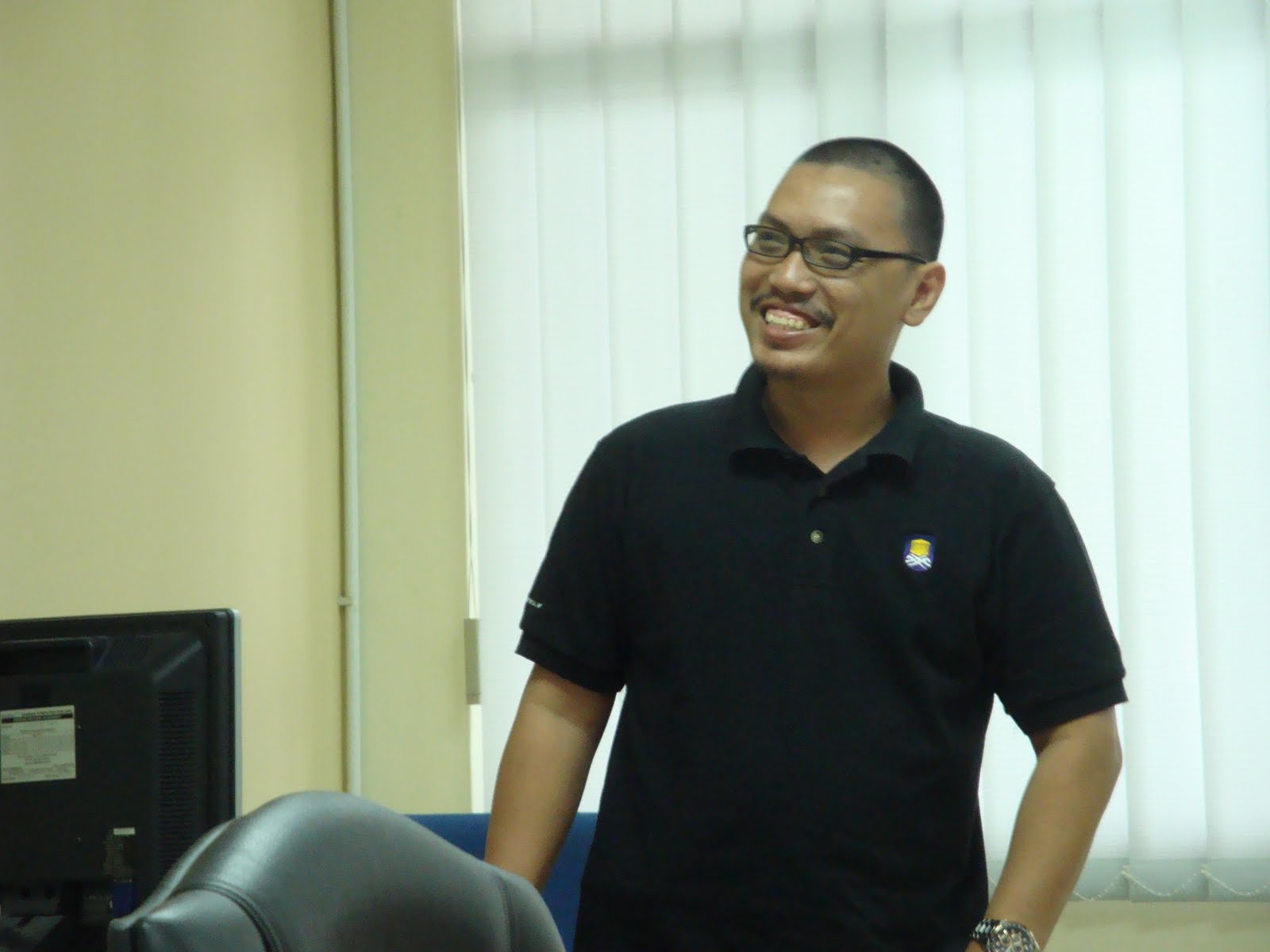 "Risk Management Analysis of AML/CFT Programs", "Evaluation of the Internal Audit Function in Preventing ML/TF" and "Fraud Risk Indicators for Tax Exasion". Throughout the semester, students present their progress during four scheduled meetings with me, who act as the supervisor for the projects. Today, the students presented their research instruments and they are preparing themselves for their field work and data collection. I foresee some very interesting findings from the research projects this semester....
Sunday, September 25, 2011
Money Laundering in NPOs
Today, the master students from the "Money Laundering and Financial Criminology"  class presented their cases on money laundering which had involved non-profit organizations. A total of ten local and global cases were presented by the students. For each case, the students need to highlight and explain the three stages of money laundering: placement, layering and integration. Theoretically, the identification seems very straight forward. However, in actual money laundering cases the stages may not be observable, hence making investigation and data collection a challenging process.
Students are also required to assess the internal control system of the organisations involved in each money laundering case and to gauge the pepetrators's personality with suitable fraud theory. All in all, as a facilitator for the course, I am very happy with the students presentations. They have shown maturity and have used suitable analytical tools to assess and evaluate their cases.
Among the NPO cases selected include Baptist Foundation of Arizona, Holy Land Foundation, Benevolence International Foundation, United Charity in Australia and the Universal Church of the Kingdom of God. Congratulations all...
 class presented their cases on money laundering which had involved non-profit organizations. A total of ten local and global cases were presented by the students. For each case, the students need to highlight and explain the three stages of money laundering: placement, layering and integration. Theoretically, the identification seems very straight forward. However, in actual money laundering cases the stages may not be observable, hence making investigation and data collection a challenging process.
Students are also required to assess the internal control system of the organisations involved in each money laundering case and to gauge the pepetrators's personality with suitable fraud theory. All in all, as a facilitator for the course, I am very happy with the students presentations. They have shown maturity and have used suitable analytical tools to assess and evaluate their cases.

Among the NPO cases selected include Baptist Foundation of Arizona, Holy Land Foundation, Benevolence International Foundation, United Charity in Australia and the Universal Church of the Kingdom of God. Congratulations all...
Sunday, June 19, 2011
ARI Training Programs
One of the main functions of the Accounting Research Institute (ARI)is to provide training programs and consultancy services in the following areas of expertise:
1) Forensic Accounting and Financial Criminology, 2) Financial Reporting, 3) Financial Statement Analysis, 4) Public Sector Accounting, 5) Accrual Accounting, 6) Accounting Information System, 7) Tax Planning, 8) Corporate & Enterprise Governance, 9) Islamic Accounting & Finance, 10) Shariah Auditing and 11) Intellectual Capital & Knowledge Management. Currently, ARI's operations are supported by researchers and professional experts from eight different research centres. The eight research centres are namely Asia-Pacific Forensic Accounting Research Centre (AFARe), Islamic Accounting & Muamalat Research Centre (IAMRC), Corporate Governance Research Centre (CGRC), Financial Reporting and Taxation Research Centre (FRRC), Asian Management Accounting Research Centre (AMARC), Asia-Pacific Centre of Sustainability (APCeS), Government-Linked Companies Research Centre (GLCRC) and Public Sector Accounting Research Centre (PSARC). Those interested with ARI training programs may contact ARI office at tel no: 603 5544 4925.
1) Forensic Accounting and Financial Criminology, 2) Financial Reporting, 3) Financial Statement Analysis, 4) Public Sector Accounting, 5) Accrual Accounting, 6) Accounting Information System, 7) Tax Planning, 8) Corporate & Enterprise Governance, 9) Islamic Accounting & Finance, 10) Shariah Auditing and 11) Intellectual Capital & Knowledge Management.
 Currently, ARI's operations are supported by researchers and professional experts from eight different research centres. The eight research centres are namely Asia-Pacific Forensic Accounting Research Centre (AFARe), Islamic Accounting & Muamalat Research Centre (IAMRC), Corporate Governance Research Centre (CGRC), Financial Reporting and Taxation Research Centre (FRRC), Asian Management Accounting Research Centre (AMARC), Asia-Pacific Centre of Sustainability (APCeS), Government-Linked Companies Research Centre (GLCRC) and Public Sector Accounting Research Centre (PSARC). Those interested with ARI training programs may contact ARI office at tel no: 603 5544 4925.
Monday, June 13, 2011
Thank You to the New Accountant General
I wish to thank and congratulate the new Accountant General of Malaysia, Datuk Wan Selamah Binti Wan Sulaiman for sharing her thoughts and experiences on the usefulness and relevance of forensic accounting in the government sector. 
Her paper which was categorised under the track of "Accountability, Legal Framework and Islamic Perspective" made an interesting discussion point among the participants. One of initiatives to be undertaken by the Accountant General Office is to increase the number of forensic accounting courses for accountants.

Her paper which was categorised under the track of "Accountability, Legal Framework and Islamic Perspective" made an interesting discussion point among the participants. One of initiatives to be undertaken by the Accountant General Office is to increase the number of forensic accounting courses for accountants.
Subscribe to:
Posts (Atom)